Transparent method
How rectangular and round pad costs are calculated
Both branches calculate concrete volume first and cost second. A rectangular pad uses length × width × thickness. A round pad uses π × radius² × thickness. The result always identifies which formula ran and keeps the selected allowance separate from measured volume.
- 01
Choose the actual plan shape
Use Rectangle for square or rectangular pads and Circle for a full circular pad. Divide irregular pads into checkable components rather than forcing them into one inaccurate shape.
- 02
Enter plan dimensions
Use dimensions from approved project information. The tool converts US or metric inputs to one internal unit before calculating and does not select thickness, bearing area, or foundation details.
- 03
Keep net and allowance visible
Net volume represents the entered geometry. If you select a planning allowance, the additional volume and its material cost appear separately so the assumption can be reviewed.
- 04
Use a current material quote
Enter a price per cubic yard or cubic meter plus disclosed delivery, fees, and tax. The result does not invent local prices or add labor, excavation, forms, reinforcement, anchorage, or finishing.
| Output | Formula |
|---|---|
| Rectangular pad | length × width × thickness |
| Round pad | π × (diameter ÷ 2)² × thickness |
| Order volume | net volume × (1 + allowance ÷ 100) |
| Material total | order volume × unit price + delivery + fees + tax |
Field context
Match the Concrete Pad Cost Calculator to the plan shape
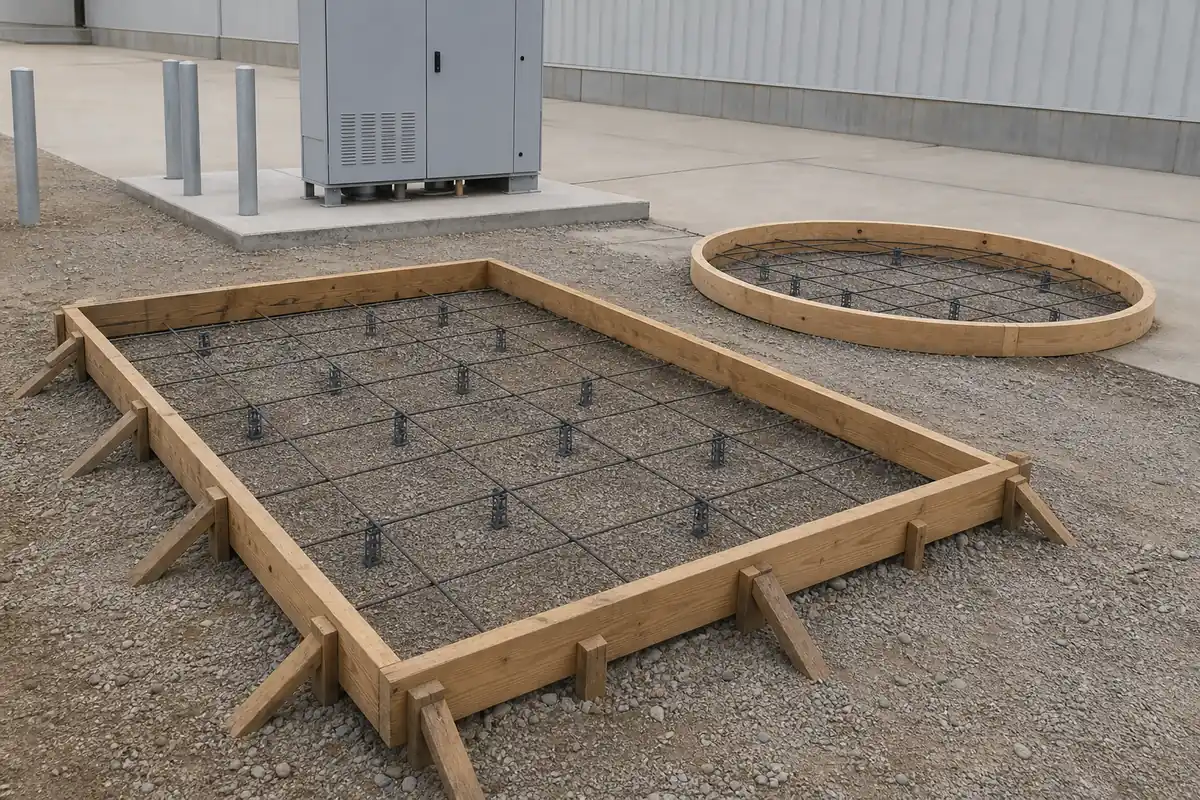
The Concrete Pad Cost Calculator separates rectangular and circular geometry so the selected formula is explicit. Enter formed dimensions from approved project information; the tool does not decide pad size, thickness, anchorage, reinforcement, soil bearing, or frost protection.
Formwork makes the difference between plan geometry and concrete volume visible. Composite or thickened pads should be split into documented components, with overlaps removed and unrounded volumes combined before a supplier rule is applied.
Check the arithmetic
Worked example: a 10 ft round pad at 6 in thick
A 10 ft diameter has a 5 ft radius, and 6 inches equals 0.5 ft. Net volume is π × 5² × 0.5 = 39.269908 ft³. That equals 1.454441 yd³, displayed as 1.45 yd³.
With a selected 5% allowance, order volume is 1.527163 yd³. At a hypothetical $150 per yd³, material is $229.07 before delivery, fees, and tax. The price and allowance are arithmetic examples—not local market data or design advice.
Use the result correctly
Pad geometry and cost boundaries
01 A pad calculator does not size the pad
Equipment loads, posts, anchors, soil, frost depth, settlement, reinforcement, and local code can govern pad dimensions. Enter dimensions from approved plans or qualified guidance rather than treating a material formula as design.
02 Model irregular shapes as components
A square pad with a circular pedestal or a pad with a drawing-specified thickened zone is a composite takeoff. Calculate each documented component separately and combine unrounded volumes without double-counting overlap.
03 Separate material cost from project cost
This page prices concrete material only. Excavation, base preparation, forms, reinforcement, anchor templates, placement, finishing, curing, testing, and labor need their own project-specific quantities and quotes.
Sources and assumptions
Reference record
- ACI CCS-1 — Concrete Craftsman Series — same-unit rectangular quantity calculation. CCS-1(10), official preview; US; checked .
- NIST Handbook 44, Appendix C — measurement conversion reference for US and metric inputs. NIST Handbook 44—2026, Appendix C; US; checked .
Checked July 30, 2026. Geometry uses standard rectangle and cylinder formulas. No material price or structural dimension is sourced or recommended; those values come from the user's project information and supplier quote.
Questions before ordering
Concrete Pad Cost Calculator FAQ
Can this calculate both square and round concrete pads?
Yes. Rectangle accepts length, width, and thickness; Circle accepts diameter and thickness. The visible diagram and formula change with the selected shape, and both branches report cubic feet, cubic yards, and cubic meters.
Does it recommend a pad thickness?
No. Thickness and plan size can depend on loads, soil, frost, anchorage, reinforcement, and local requirements. Use approved drawings or advice from a qualified professional and enter that thickness into the calculator.
What costs are included?
Only concrete material calculated from the entered unit price, allowance, delivery, additional fees, and tax. The tool excludes excavation, base, forms, reinforcement, anchors, equipment, placement, finishing, curing, testing, permits, and labor.
Can I use metric dimensions and a price per cubic meter?
Yes. Select metric units beside each dimension and choose the per-m³ price basis. The internal calculation preserves full precision and reports both U.S. and metric volume outputs.
How should I calculate several pads?
Run each distinct pad and multiply only when dimensions are identical. Add the unrounded volumes before applying any overall supplier rule. This avoids rounding every small pad separately or hiding differences between pad types.
Planning boundary
What this result does not decide
Material quantity and material-cost planning estimate only. This is not structural or foundation design, an installed-cost quote, or supplier confirmation. Verify dimensions, loads, soil and frost requirements, reinforcement, anchorage, product specification, and order quantity with qualified project parties.